
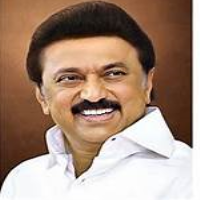


 Basic Information :
[ MLA ]
stalin MK Stalin
Basic Information :
[ MLA ]
stalin MK Stalin
stalin Mk MK Stalin
-- -- ----
stalin@indialeader.com
1111111111
Perambalur
Muthuvel Karunanidhi Stalin, commonly known as M.K. Stalin, is a prominent Indian politician currently serving as the Member of the Legislative Assembly (MLA) from the Kolathur constituency in Tamil Nadu. He is the Chief Minister of Tamil Nadu since 2021 and the president of the Dravida Munnetra Kazhagam (DMK) party. Stalin has a long political career, having also served as the Mayor of Chennai (1996-2002) and the first Deputy Chief Minister of Tamil Nadu (2009-2011). As a key leader of DMK, he focuses on development, youth empowerment, social welfare, and women’s empowerment. His initiatives include free breakfast programs for students and tuition assistance. Stalin, son of former CM M. Karunanidhi, is respected for his social work and leadership in Tamil Nadu politics.
stalin MK Stalin is current MLA from Perambalur []. He belongs to Dravida Munnetra Kazhagam [ DMK ].
stalin MK Stalin is current MLA from Perambalur []. He belongs to Dravida Munnetra Kazhagam [ DMK ].
Social and Political Life of M.K. Stalin, MLA from Tamil Nadu
Political Journey and Milestones
Muthuvel Karunanidhi Stalin, popularly known as M.K. Stalin, began his political journey at an early age, influenced by his father M. Karunanidhi, a prominent leader in Tamil Nadu. Stalin's political activism started at 14 when he campaigned alongside his father. In 1968, he and his friends founded the DMK Youth Wing, marking his entry into active politics within the Dravida Munnetra Kazhagam (DMK) party.
Stalin's early political career was marked by significant events, including his opposition to the Emergency imposed by the Indira Gandhi government, for which he was imprisoned under MISA. He contested his first assembly election in 1984 from the Thousand Lights constituency but won it for the first time in 1989 and has since been a consistent electoral winner. His rise through party ranks was steady, holding key positions such as secretary of the DMK Youth Wing for over four decades and eventually taking over as DMK party president in 2018 after his father's death. He has been instrumental in grassroots political mobilization and advocating issues like civil liberties, local governance, and social justice.
Current Political Role
As of now, M.K. Stalin serves as the Chief Minister of Tamil Nadu and the president of the DMK party. He is an MLA from the Kolathur constituency in Chennai district. Since becoming Chief Minister in May 2021, Stalin has focused on legislative performance through active participation in debates, initiating welfare schemes, and utilizing constituency development funds for infrastructure and social programs. His leadership led DMK to a majority win in the 2021 state assembly elections where the party secured 133 of 234 seats. His popularity is reinforced by a strong public support base, positioning him as a key figure in Tamil Nadu politics in 2024.
Social Work and Community Engagement
Stalin's tenure as mayor of Chennai (1996-2002) was notable for the "Singara Chennai" initiative, aimed at urban beautification, infrastructure enhancement, and better municipal services. As Chief Minister, his administration has launched several welfare schemes including free breakfast for schoolchildren, tuition assistance, free bus passes for women, and extensive drinking water projects such as Hogenakkal and Ramanathapuram schemes.
He has promoted rural empowerment by significantly expanding Women Self-Help Groups (SHGs) across Tamil Nadu, contributing to local economic development. His government also implemented schemes oriented towards education, healthcare access, and sanitation improvements, reflecting a widespread community engagement approach.
Youth and Women Empowerment
M.K. Stalin is known for empowering youth through student scholarships, career guidance programs, and initiatives supporting startups and new entrepreneurs. He has maintained a focus on creating opportunities for young leaders at the grassroots level via the DMK Youth Wing activities.
For women, particularly in rural areas, Stalin's policies have emphasized the formation and strengthening of Self-Help Groups, supporting financial inclusion, and enhancing access to social and educational resources for marginalized women, thereby fostering socio-economic empowerment.
Election Performance and Campaign Style
Stalin has contested nine assembly elections, winning seven times predominantly from the Thousand Lights and Kolathur constituencies in Chennai. His campaigns combine traditional outreach methods like padayatras (foot marches) with digital media strategies to connect with voters extensively. Campaign themes often emphasize social justice, development, and inclusive growth, consistent with DMK's ideology.
Public Perception and Media Presence
M.K. Stalin is widely regarded as a grassroots leader with a clean image, often described as a committed "karyakarta" (worker) deeply connected to public issues. His thorough party work and approachability have earned him respect in political and public circles. Media coverage highlights his leadership during elections, his development initiatives, and his public speeches, often portraying him as a stabilizing and progressive figure in Tamil Nadu politics.
Associations and Leadership Roles
Apart from being the DMK president, Stalin has held various leadership roles including Mayor of Chennai, Deputy Chief Minister of Tamil Nadu (2009-2011), and Minister for Rural Development and Local Administration. He continues to hold significant influence in party structures and alliances such as the Secular Progressive Alliance, which he formed to consolidate left-wing and secular forces in the state.
Recognitions and Awards
While specific awards may not be widely documented, Stalin's political and social work has garnered recognition from civil society and political commentators as a leading Tamil Nadu politician promoting social justice and inclusive development.
Crisis Response and Ground Presence
Throughout his career, Stalin demonstrated active engagement during crises. During the COVID-19 pandemic and other emergencies, his administration undertook relief efforts and maintained direct communication with constituents. His history of grassroots activism and public service underlines a consistent ground presence.
Personal Life of M. K. Stalin: Chief Minister of Tamil Nadu
Early Life and Family Background
Muthuvel Karunanidhi Stalin, popularly known as M. K. Stalin, was born on 1 March 1953 in Chennai, Tamil Nadu (then Madras). He is the son of M. Karunanidhi, the five-time Chief Minister of Tamil Nadu and a towering figure in Dravidian politics, and Dayalu Ammal, Karunanidhi’s second wife.
Growing up in a politically active household, Stalin was deeply influenced by his father’s legacy of Dravidian ideology, social justice, and Tamil cultural pride. Named after the Soviet leader Joseph Stalin, his formative years were shaped by values of integrity, service, and community welfare, which continue to guide his personal and political journey.
Education and Personal Values
M. K. Stalin pursued his education at Madrasa Higher Secondary School, Chennai, and later at The New College, University of Madras, where he earned a degree in History. His academic background exposed him to history, political thought, and social movements, laying the foundation for his leadership abilities.
Deeply influenced by the principles of equality, inclusivity, and social justice—hallmarks of the Dravidian movement—Stalin has maintained a people-centric and rights-based approach both in his personal and public life. His political values reflect admiration for leaders such as Periyar E. V. Ramasamy, C. N. Annadurai, and his father, Karunanidhi.
Family and Relationships
M. K. Stalin is married to Durga Stalin (Durgavathy). The couple share a close bond built on mutual respect and support throughout Stalin’s long political journey. They have two children:
Udhayanidhi Stalin – Film producer, actor, and politician, currently serving as the Minister for Youth Welfare and Sports Development of Tamil Nadu.
Senthamarai Sabareesan – An educational administrator who manages a leading school.
Despite his demanding political career, Stalin places high importance on maintaining close family ties. He often credits his personal stability and growth to the unwavering support of his wife and children.
Lifestyle and Interests
Known for his modesty and grounded lifestyle, Stalin avoids extravagance, preferring meaningful interactions with people over public display. He is passionate about sports and cultural activities, particularly football and theatre. As a young man, Stalin even acted in a few Tamil plays and a television serial, reflecting his interest in the arts and creative expression.
He is deeply committed to lifelong learning, showing a keen interest in Tamil culture, literature, and contemporary political thought. Travel and interaction with people across Tamil Nadu remain one of Stalin’s core ways of staying connected and informed.
Community Engagement and Personal Philosophy
M. K. Stalin is recognized across Tamil Nadu for his grassroots political engagement. From his early days as a ward councillor in Chennai to becoming the Chief Minister, he has consistently emphasized direct communication with citizens. His leadership has been marked by:
Extensive travel across the state, holding public meetings and listening to grievances.
An open-door policy, welcoming dialogue from people of all strata.
Recognition of party workers, often attributing his success to the dedication and hard work of DMK cadres and grassroots volunteers.
Stalin’s political philosophy prioritizes social justice, inclusive growth, and welfare-oriented governance.
Recognition and Public Image
Over the years, Stalin has been recognized for his administrative experience and governance model, especially for his tenure as the Mayor of Chennai (1996–2002), where he modernized the city’s infrastructure.
As the Chief Minister of Tamil Nadu (since May 2021), he has been acknowledged for steering the state through the COVID-19 pandemic with effective relief measures, healthcare interventions, and welfare schemes.
Stalin is widely respected for his humility, accessibility, and commitment to public service, earning him the image of a “people’s leader” in Tamil Nadu.
Please Add Description